
Daily disposable lenses
Best for travel, sports and occasional wearWorn once and discarded at the end of the day. Convenient and hygienic, and often helpful for occasional wear, travel, sports, allergies or busy routines.
Contact lenses that fit your eyes, your tear film and your life, not just your prescription.
A contact lens exam is more than choosing a box of lenses. Because contacts sit directly on the eye, they need to match your prescription, corneal shape, tear film, comfort needs, wearing schedule and lifestyle. We help new and experienced wearers find a safe, comfortable fit.

Your glasses prescription is only one part of the contact lens fitting process. Contact lenses rest directly on the surface of the eye, so the fit must be comfortable, stable, breathable and healthy.
A lens that does not fit properly can move too much, feel dry, blur your vision, irritate the eye or increase the risk of complications. A lens that fits well should give you clear vision, feel comfortable through the day and support the long-term health of your eyes.
At Capital Vision Care, we assess your eyes before recommending lenses, so your contact lens prescription is built around how your eyes actually function.
A contact lens exam is a specialized eye exam and fitting for people who want to wear contacts. It includes your vision prescription, eye health assessment, corneal measurements, tear film evaluation, lens selection, trial lens fitting, comfort check, vision check and contact lens safety education.
Your optometrist confirms the lens type, power, fit and wearing schedule before finalizing your contact lens prescription.
Your optometrist recommends lenses based on your eyes, prescription, comfort and lifestyle.
Worn once and discarded at the end of the day. Convenient and hygienic, and often helpful for occasional wear, travel, sports, allergies or busy routines.
Reused for a set replacement period and cleaned daily. A good option for regular wearers who are comfortable with lens care.
Designed to correct astigmatism. They need to sit in the right position on the eye to keep vision clear and stable.
Support both distance and near vision, for patients who want less dependence on reading glasses.
If dryness or irritation has made contacts difficult, we assess your tear film and discuss lens materials, wearing schedules, drops and dry eye treatment.
Some teens are strong candidates, especially for sports, confidence or active lifestyles. Readiness depends on responsibility, hygiene, eye health and training.
For prescriptions, eye shapes, corneal conditions, post-surgical eyes or comfort challenges that need a more customized option.
Trying contact lenses for the first time can feel intimidating. We make the process calm, practical and hands-on.
You will not be sent home with contacts until you are comfortable handling them safely.
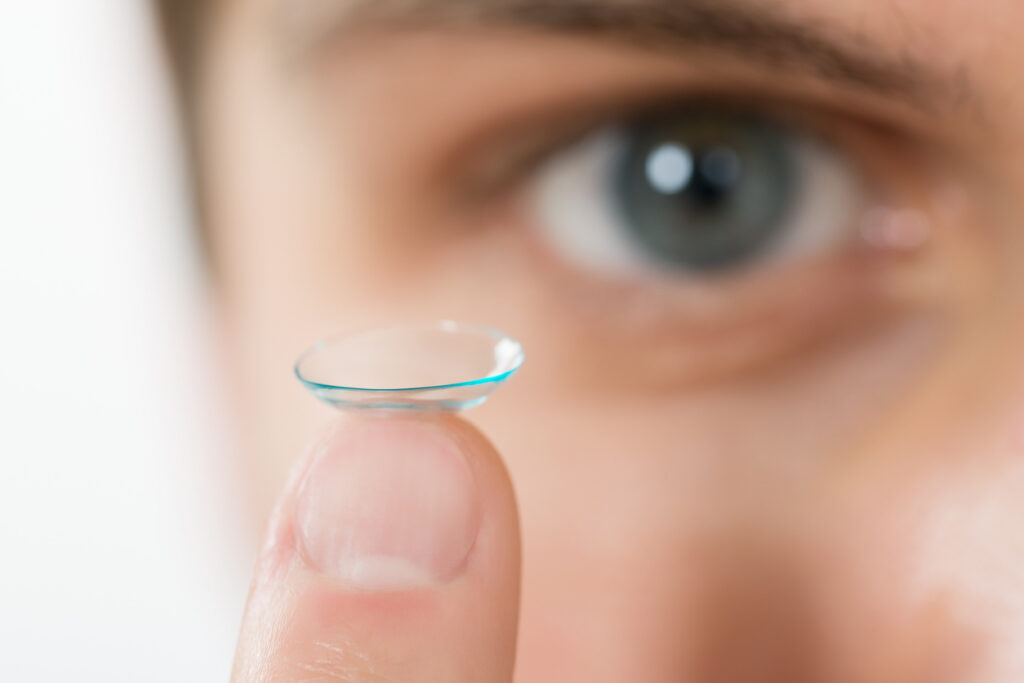
New to contacts or due for a refit? Book a contact lens exam at any of our six clinics.
Book a Contact Lens ExamA contact lens exam or refit is the right next step if any of these sound familiar.
Call sooner if you have pain, redness, discharge, light sensitivity or sudden blurry vision while wearing contacts.
Many people give up on contacts because they feel dry, gritty, blurry or uncomfortable. Sometimes the issue is the lens design. Other times it is the tear film, eyelids, oil glands, allergies, screen use or dry eye disease.
If your contacts are uncomfortable, your optometrist may recommend a different lens material, a daily disposable option, dry eye treatment, lid hygiene, lubricating drops or a modified wearing schedule, and can coordinate care with our dry eye technology and ocular hygienist support.
Yes. A regular eye exam checks vision and eye health. A contact lens exam adds measurements, fitting, trial lenses, comfort assessment, lens movement assessment and contact lens safety education.
No. A contact lens prescription is different. Contacts sit directly on the eye, so it must include lens-specific details such as brand, power, curve, diameter and fit.
Sometimes. Your optometrist will assess your tear film and may recommend a different lens type, daily disposables, dry eye treatment or a modified wearing schedule.
Capital Vision Care offers contact lens exams and fittings across six Edmonton-area clinics. Choose the location that works best for your schedule, commute, school, work or neighbourhood.
A contact lens fitting includes measurements of your eyes, assessment of your tear film and eye health, lens selection, trial lens evaluation, vision testing with the lenses, comfort assessment, and training on safe insertion, removal and care.
Timing depends on whether you are a new wearer, need training, are trying multifocal or toric lenses, or require a more complex fit. Your clinic team can explain the expected appointment length when you book.
Contact lenses are safe for many patients when they are properly fitted, cleaned, replaced and worn as directed. Poor hygiene, overwear, water exposure, sleeping in lenses or ignoring symptoms can increase the risk of eye problems.
You should avoid exposing contact lenses to water, including showers, pools, hot tubs, lakes and tap water. Water can expose the lenses and eyes to germs and increase infection risk.
Do not sleep in contact lenses unless your optometrist has specifically prescribed lenses for overnight wear and explained the risks. Sleeping in contacts can increase the risk of infection and irritation.
Remove your contact lenses and call the clinic, especially if you have pain, light sensitivity, discharge or blurry vision. Do not keep wearing lenses through symptoms.
Neither is automatically better for everyone. Daily lenses are convenient and reduce cleaning steps, while monthly lenses may be preferred for certain prescriptions or budgets. Your optometrist can recommend the best option for your eyes.
Yes. Toric contact lenses are designed to correct astigmatism. They require a proper fit to keep vision clear and stable.
Multifocal contact lenses may help some patients see at both distance and near. They are not perfect for everyone, but they can be a good option for patients who want less dependence on reading glasses.
Many teens can wear contact lenses successfully if they are responsible with hygiene and handling. Your optometrist will assess readiness, eye health, prescription and lifestyle.
Contact lens discomfort can be caused by dry eye, allergies, poor lens fit, overwear, deposits, old lenses, screen use, eye inflammation or the wrong lens material. A contact lens refit can help identify the cause.
Yes. Once your contact lens prescription is finalized and current, our team can help you order the lenses recommended by your optometrist.
Whether you are new to contact lenses or frustrated with lenses that feel dry, blurry or uncomfortable, we can help. Book a contact lens exam and fitting at one of our six Edmonton-area clinics.
For safe contact lens wear and care: