
Diabetic retinopathy
We look for damage to the small blood vessels in the retina, including leaking, bleeding or abnormal new vessels.
Diabetes can quietly affect your eyes long before you notice. An annual exam catches it early.
Diabetes is one of the leading causes of vision loss in adults, but most early damage has no symptoms. A diabetic eye exam checks the retina and blood vessels at the back of the eye so changes are found and managed early, while your vision can still be protected.
High blood sugar can damage the tiny blood vessels in the retina, the light-sensitive tissue at the back of the eye. This is called diabetic retinopathy, and it can develop with both type 1 and type 2 diabetes.
In its early stages, diabetic retinopathy usually has no symptoms, so you can feel fine while changes are already happening. Left unchecked, it can lead to bleeding, swelling of the macula and permanent vision loss.
Regular diabetic eye exams let your optometrist detect these changes early, monitor them over time, and coordinate care with your family doctor or a specialist when needed.

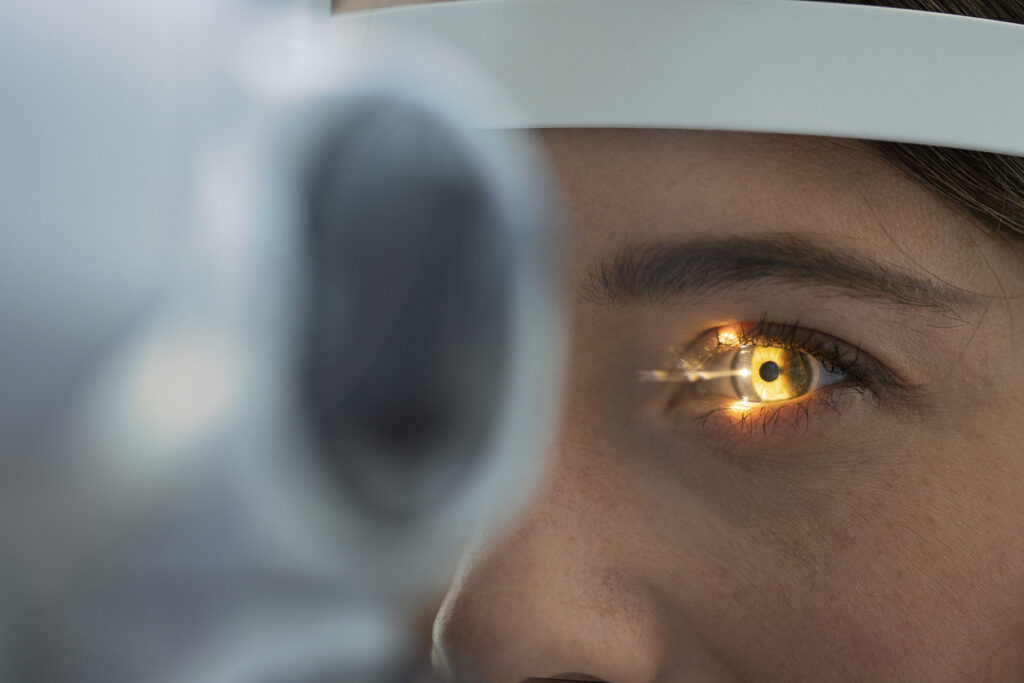
A diabetic eye exam is a medical eye exam focused on finding the eye changes caused by diabetes. Your optometrist widens the pupils when needed, examines the retina and its blood vessels, checks for swelling at the macula, and may capture retinal images to track changes over time.
It is recommended every year for most people with diabetes, even when your vision seems fine, and it is generally covered by Alberta Health Care.
Diabetes can affect several parts of the eye, so the exam is thorough.
We look for damage to the small blood vessels in the retina, including leaking, bleeding or abnormal new vessels.
We check the macula, the centre of your vision, for swelling that can blur sight if it is left untreated.
Where appropriate, we capture images of the back of the eye to document changes and compare them over time.
We measure eye pressure, since people with diabetes have a higher risk of glaucoma.
Diabetes can lead to cataracts earlier in life, so we check the lens of the eye.
We assess your vision and the front of the eye to build a full picture of your eye health.
Living with diabetes? Book your annual eye exam at any of our six clinics.
Book a Diabetic Eye ExamAn annual exam is recommended for most people with diabetes. Book sooner if any of these apply.
Call us right away if you have sudden vision loss, a curtain or shadow over your vision, or many new floaters. These can be signs of a serious problem.
Because diabetes affects eye health, Alberta Health Care generally covers an eye exam each year for Albertans with diabetes, at any age. Our team will confirm your coverage and direct bill where possible.
Most people with diabetes should have an eye exam every year, or more often if your optometrist finds changes that need closer monitoring.
Often not. Early diabetic retinopathy usually has no symptoms, which is why a yearly exam is so important even when your vision feels fine.
Diabetic eye exams are generally covered by Alberta Health Care because they are medically necessary. We will confirm your coverage when you book.
Capital Vision Care offers diabetic eye exams across six Edmonton-area clinics. Choose the location that works best for your schedule, commute or neighbourhood.
Diabetic retinopathy is damage to the small blood vessels in the retina caused by high blood sugar over time. It is a leading cause of vision loss in adults and can be managed well when it is caught early.
Most people with diabetes should have a dilated eye exam every year. Your optometrist may recommend more frequent exams if changes are found.
Yes, in most cases. Because diabetes affects eye health, an annual eye exam is generally covered as medically necessary care for Albertans with diabetes, at any age.
Often, yes. Dilating drops widen the pupils so your optometrist can see the retina clearly. Your vision may be blurry and light-sensitive for a few hours afterward, so consider bringing sunglasses and arranging a ride.
Untreated diabetic eye disease can lead to severe vision loss, but regular exams and good diabetes control greatly reduce that risk. Early detection is key.
Yes. Early diabetic eye changes usually have no symptoms, so a yearly exam is recommended even when your vision feels normal.
Bring your Alberta Health card, a list of your medications, your glasses or contacts, and information about your diabetes and recent blood sugar levels if you have it.
An annual diabetic eye exam is one of the most effective ways to catch eye changes early. Book at one of our six Edmonton-area clinics today.
Trusted background on diabetic eye health and Alberta coverage: